Insights
Launch your iGaming media property in 2026

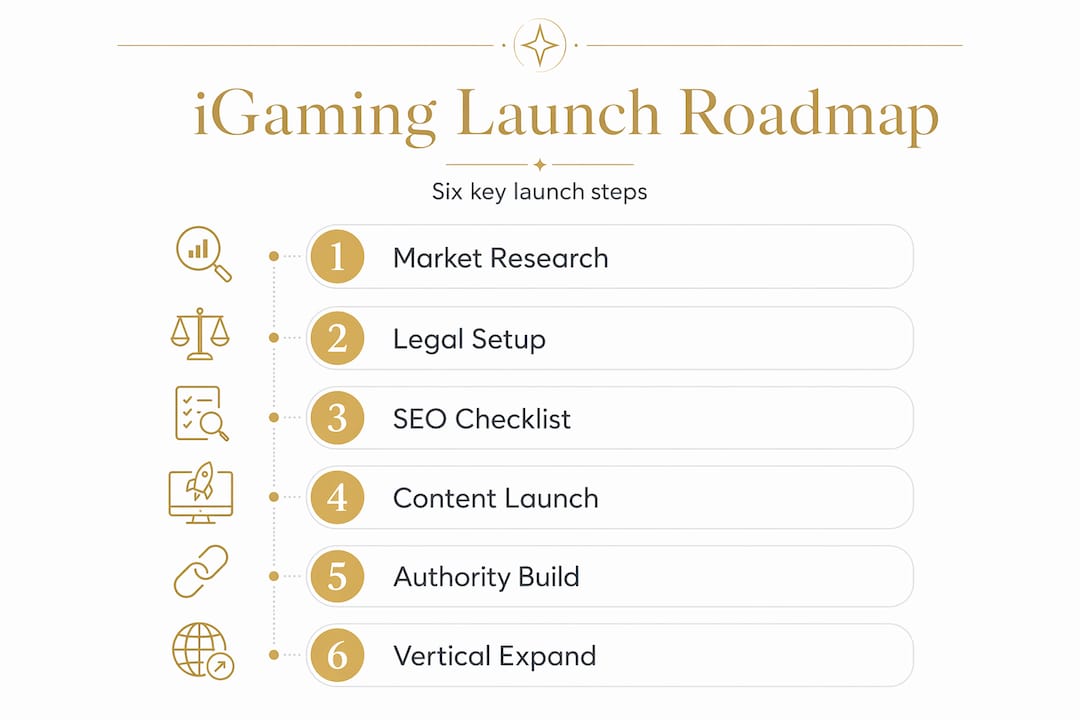
Decision-making is brutally slow in iGaming media until you commit to a plan. The market is regulated, fiercely competitive, and deeply technical, yet it rewards those who enter with precision and patience. If you want to launch an iGaming media property that attracts real authority and sustainable revenue, you need more than a content calendar and a WordPress theme. You need a phased strategy that covers compliance, content, technical architecture, and PR simultaneously. This guide gives you exactly that.
Table of Contents
- Key takeaways
- Launch igaming media property: the foundation phase
- Content strategy for the launch phase
- Building authority after launch
- Expanding verticals and integrating with events
- Monitoring performance and staying compliant
- My experience with iGaming media launches
- Start your iGaming media journey with Myluckyuniverse
- FAQ
Key takeaways
| Point | Details |
|---|---|
| Plan in phases | A 180-day roadmap from foundation to vertical expansion gives your launch structure and measurable milestones. |
| Compliance is non-negotiable | Missing age banners or affiliate disclosures can trigger manual Google penalties and regulatory consequences before you gain traction. |
| Content volume matters early | Sites publishing 30+ quality pieces in the first three months reach ROI 2-3 months earlier than those publishing fewer articles. |
| Hybrid editorial teams win | Combining in-house named authors with freelance vertical experts satisfies E-E-A-T requirements and builds domain credibility faster. |
| PR is a long-term asset | Consistent media presence eases licensing reviews and partnerships, not just brand awareness. |
Launch igaming media property: the foundation phase
Before you write a single word of content or register a domain, you need a clear picture of the market you are entering. iGaming is not a monolithic space. It spans casino reviews, sports betting analysis, poker strategy, crypto wagering, and regulated lottery content, each with its own audience, search intent, and legal requirements. Spending two to three weeks mapping your niche, your competitors, and your target reader is not optional. It determines every architectural decision that follows.
Legal and compliance setup
The regulatory dimension separates iGaming media from virtually every other publishing category. Depending on your target markets, you may need to display responsible gambling messaging, link to national problem gambling support services, and clearly disclose affiliate relationships. Technical SEO for iGaming requires specific attention to age gates, responsible gambling schema, and content authorisation to avoid manual penalties or site deindexing. This is not a post-launch checklist item. It belongs in your initial technical specification.
Your site architecture must support the following before you go live:
- Age verification banners or gates for jurisdictions that require them
- Responsible gambling disclosures on all review and bonus pages
- Schema markup for reviews, FAQs, and author credentials
- A transparent affiliate disclosure policy, accessible from every page
- Author bio pages with verifiable credentials and professional histories
Pro Tip: Register your editorial team’s author profiles on LinkedIn and industry databases before launch. Google’s E-E-A-T signals pull from off-site sources, and a named author with a public professional history builds trust faster than any on-page optimisation alone.
Technical SEO groundwork
Your technical audit checklist should cover Core Web Vitals targets, canonical tag structure, hreflang setup if you plan multilingual content from day one, and a crawl budget strategy for large category pages. Map your keyword clusters before you build your URL structure. Reorganising a site after launch costs weeks and link equity. Getting it right the first time is far cheaper.

Content strategy for the launch phase
The first 60 days of content production set your authority ceiling for the next 12 months. This is not the time for thin affiliate listicles. You need pillar pages that own a topic completely, supported by cluster content that targets the long-tail queries your audience actually types.
Here is a practical production framework for the first 60 days:
- Build two to three pillar pages first. Each pillar should be 3,000 words minimum, covering a core topic like “online casino regulations in Canada” or “how sports betting odds work.” These pages anchor your topical authority.
- Produce cluster content around each pillar. Aim for six to eight supporting articles per pillar, targeting specific questions, comparisons, and beginner guides that link back to the pillar page.
- Set a non-negotiable publication cadence. A content cadence of 2 to 4 blog posts per week, plus daily updates during major sporting events, is the recommended standard for maintaining E-E-A-T signals and audience engagement.
- Commission original research. Even a single industry survey or data-driven report published within your first 90 days will generate more backlink interest than a dozen standard review articles. Journalists and regulators respond to original data.
- Use a hybrid editorial model. 2-3 in-house named authors combined with 1-2 freelance vertical experts meets E-E-A-T requirements while keeping payroll manageable during the launch window.
Pro Tip: Do not wait until you have 50 articles to go live. Launch with 15 to 20 strong pieces and a visible content roadmap. A sparse but high-quality site builds trust faster than a rushed bulk-publish strategy.
The best iGaming content creation tips consistently point to one truth: specificity outperforms volume. A detailed, cited guide on responsible gambling tools in Ontario will outrank a generic “best Canadian casinos” page written to rank for a broad keyword. For deeper content planning frameworks, the casino content marketing guide from Myluckyuniverse is worth reading before you build your editorial calendar.
Building authority after launch
The 61 to 90 day window is where most new iGaming properties stall. Traffic is modest, monetisation is thin, and it is tempting to either flood the site with low-quality content or pivot the strategy entirely. Neither works. This phase is about targeted optimisation and deliberate link building.
Content refresh cycles matter more than people realise. Revisit your first 20 published articles at day 60 and look for three things: missing schema markup, internal linking gaps, and opportunities to add original data or expert quotes. A single refresh pass that adds a cited statistic, a relevant internal link, and an updated author note can shift a page from page three to page one within weeks.
On the link-building side, your outreach priorities should be:
- Industry journalists and editors covering iGaming, fintech, and sports regulation who publish on high-authority news sites
- Regulatory bodies and consumer protection organisations that link out to responsible gambling resources
- Affiliate marketing communities where your editorial standards will stand out from the average thin-content affiliate site
- Conference and event organisers who need authoritative media partners
The comparison below shows how passive content publishing differs from active authority building:
| Approach | 90-day link acquisition | Domain authority growth | Traffic quality |
|---|---|---|---|
| Passive publishing only | 3 to 8 backlinks | Slow, incremental | Mixed, low intent |
| Active outreach + content | 20 to 40 backlinks | Accelerated, directional | High intent, qualified |
Monitor Core Web Vitals weekly during this phase. Google’s ranking signals treat page experience as a threshold factor in competitive niches, and iGaming is one of the most competitive categories in search. A Largest Contentful Paint score above 2.5 seconds on mobile is a liability you cannot afford.
Expanding verticals and integrating with events
Once your core content area is stable and generating consistent traffic, the next phase is diversification. If you launched with casino content, adding a sportsbook vertical gives you a second traffic stream and expands your affiliate earning potential. If you started with English-only content, a Spanish or French language expansion opens Latin American and European markets that many English-language operators underserve.
A practical expansion sequence for days 91 to 180:
- Identify one adjacent vertical where your existing audience already has interest. Use your internal search data and comment behaviour to find it rather than guessing.
- Implement hreflang tags before publishing any multilingual content. Deploying translated pages without correct hreflang structure creates duplicate content risks that take months to untangle.
- Align editorial content with industry events. Integrating conference coverage and insights keeps your platform relevant between publishing cycles and positions you as an editorial home for the affiliate and operator community.
- Build a PR presence that persists between launches. The most effective iGaming media brands treat PR as a compounding investment. A consistent media presence eases licensing reviews, partner negotiations, and investor conversations in ways that no single press release can replicate.
Localisation is underestimated at this stage. Translating an article is not the same as localising it. A page about online casino bonuses in Canada requires different regulatory context, different operator references, and different responsible gambling links than the same page written for a Swedish or Australian audience. Build localisation quality into your editorial process from the start, not as an afterthought.
For those managing multiple brands through this expansion, the multi-brand iGaming portfolio guide from Myluckyuniverse offers a practical framework for keeping each property compliant and individually authoritative without duplicating infrastructure.
Monitoring performance and staying compliant
Sustainable growth in iGaming media requires measurement discipline that goes well beyond standard analytics. Your performance monitoring framework should cover:
- Content engagement metrics: time on page, scroll depth, and return visit rate by article category
- Attribution analysis: tracking which content pieces drive affiliate conversions, not just traffic
- Compliance audit logs: automated records of advertising creatives and affiliate disclosures are legally expected in most regulated markets, and you need them before a regulator asks
- Cohort analysis: segmenting users by acquisition source to identify which channels bring the highest-value readers over a 90-day window
- Technical health checks: weekly crawls to catch broken internal links, missing canonical tags, and newly introduced duplicate content
The compliance dimension deserves specific attention. Operators are held liable for their affiliates, which means your media property’s advertising and promotional content standards affect the operators who partner with you. Maintaining audit-ready records is not bureaucratic overhead. It is a competitive differentiator that serious operators will value when choosing which properties to partner with.
Pro Tip: Set a quarterly compliance review in your editorial calendar from day one. Walk through every active affiliate disclosure, every bonus review page, and every advertising creative placement. Catching a non-compliant element in-house is significantly less costly than having a partner or regulator catch it for you.
My experience with iGaming media launches
I’ve seen properties enter this market with brilliant content strategies and fail within 18 months because they treated compliance as a legal formality rather than an editorial standard. And I’ve seen modestly resourced outlets grow into genuine industry references because they understood one thing: trust compounds.
What I’ve learned from working across multiple iGaming media properties is that the biggest mistake operators and media founders make is treating PR as a campaign rather than a commitment. You do not build journalist relationships by sending a press release when you have something to announce. You build them by being a reliable, knowledgeable source over months and years. When a regulatory story breaks or an industry event generates controversy, the outlets journalists call first are the ones they already trust.
The second lesson is about team structure. Hiring exclusively for content volume will hurt you in this niche. A hybrid editorial team, where a core of named in-house authors is supported by contracted subject-matter experts in specific verticals, produces content that passes both editorial scrutiny and Google’s E-E-A-T evaluation. Readers and algorithms alike can tell the difference between a genuine expert writing about poker variance and a generalist paraphrasing a Wikipedia article.
My honest take: if you are not prepared to invest in compliance infrastructure, a credentialed editorial team, and a multi-year PR strategy simultaneously, the iGaming media space will punish you quickly. Those who treat it as a niche affiliate play with low barriers to entry misread the market entirely.
— Lucky
Start your iGaming media journey with Myluckyuniverse

Myluckyuniverse is built specifically for the kind of media work this article describes. With over 20 years of industry experience and an AI-native approach to iGaming content, the platform offers structured, editorial-grade resources for entrepreneurs and media professionals at every stage of their launch. Whether you are mapping your compliance framework, planning your content architecture, or preparing for your first vertical expansion, explore Myluckyuniverse for guidance that reflects how the industry actually works in 2026. The resources are practical, the perspective is earned, and the standards match what serious operators and regulators expect.
FAQ
What is a realistic timeline to launch an iGaming media property?
A structured 180-day roadmap covering foundation, content production, optimisation, and vertical expansion is the industry standard for a credible launch with sustainable growth potential.
How much content do I need before going live?
Aim for 15 to 20 high-quality articles before launch, then scale to 2 to 4 new pieces per week. Publishing 30 or more quality pieces within the first three months accelerates ROI by two to three months compared to slower-publishing properties.
Do iGaming media sites need compliance documentation?
Yes. Most regulated markets require audit-ready records of advertising creatives and affiliate disclosures. Operators are held liable for affiliate content, which means your disclosure standards directly affect your partner relationships and regulatory standing.
How do I build authority for a new iGaming media site?
Combine in-house named authors with freelance vertical experts, publish original research, and pursue targeted outreach to industry journalists. A hybrid editorial team that meets E-E-A-T standards is more effective than a large team of generalist writers.
Is PR necessary for an iGaming media startup?
Yes, and it should start before launch. Consistent media presence eases licensing reviews, partnership negotiations, and investor due diligence in ways that advertising and SEO alone cannot achieve.